
Custom Timber Barn Homes
Designed around how you want to live, built from premium New
Zealand timber, and made to last well beyond a lifetime.
What Makes a Timber Barn Home Different
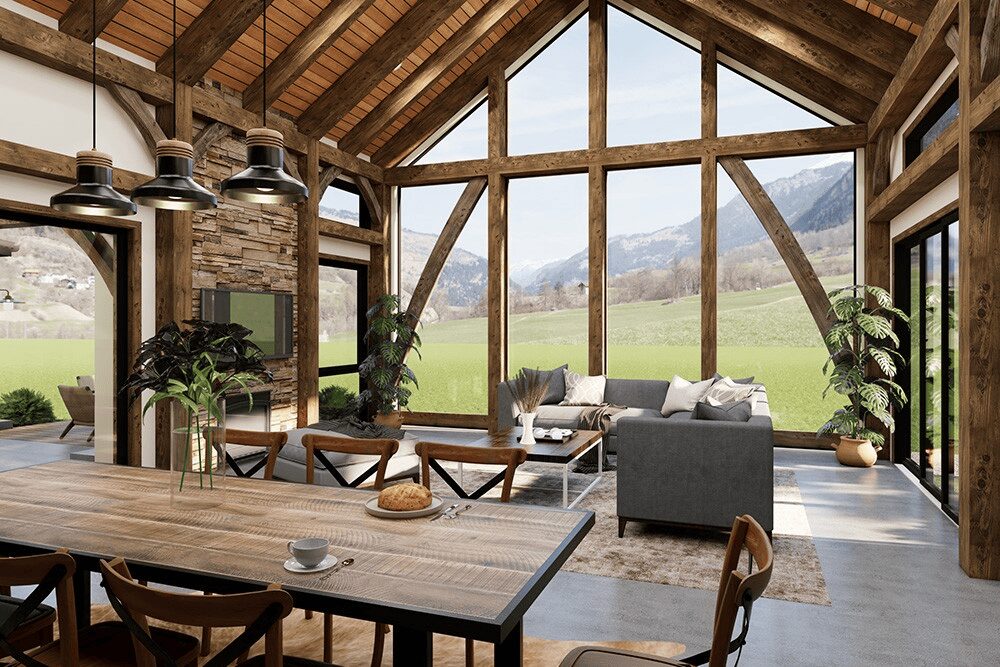
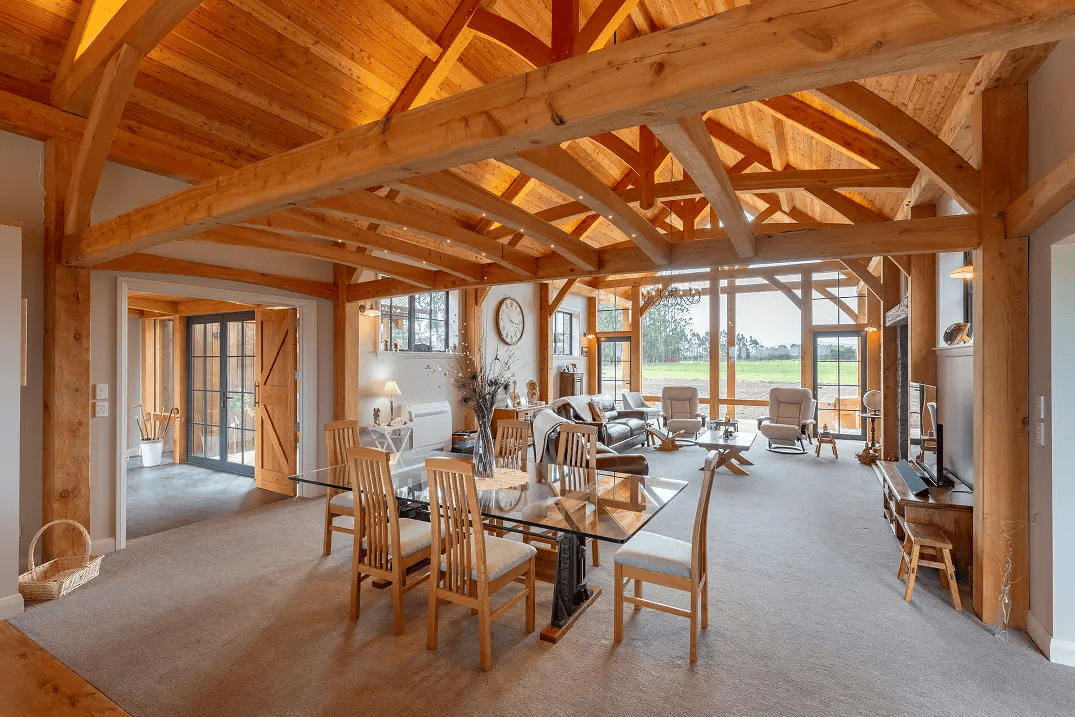
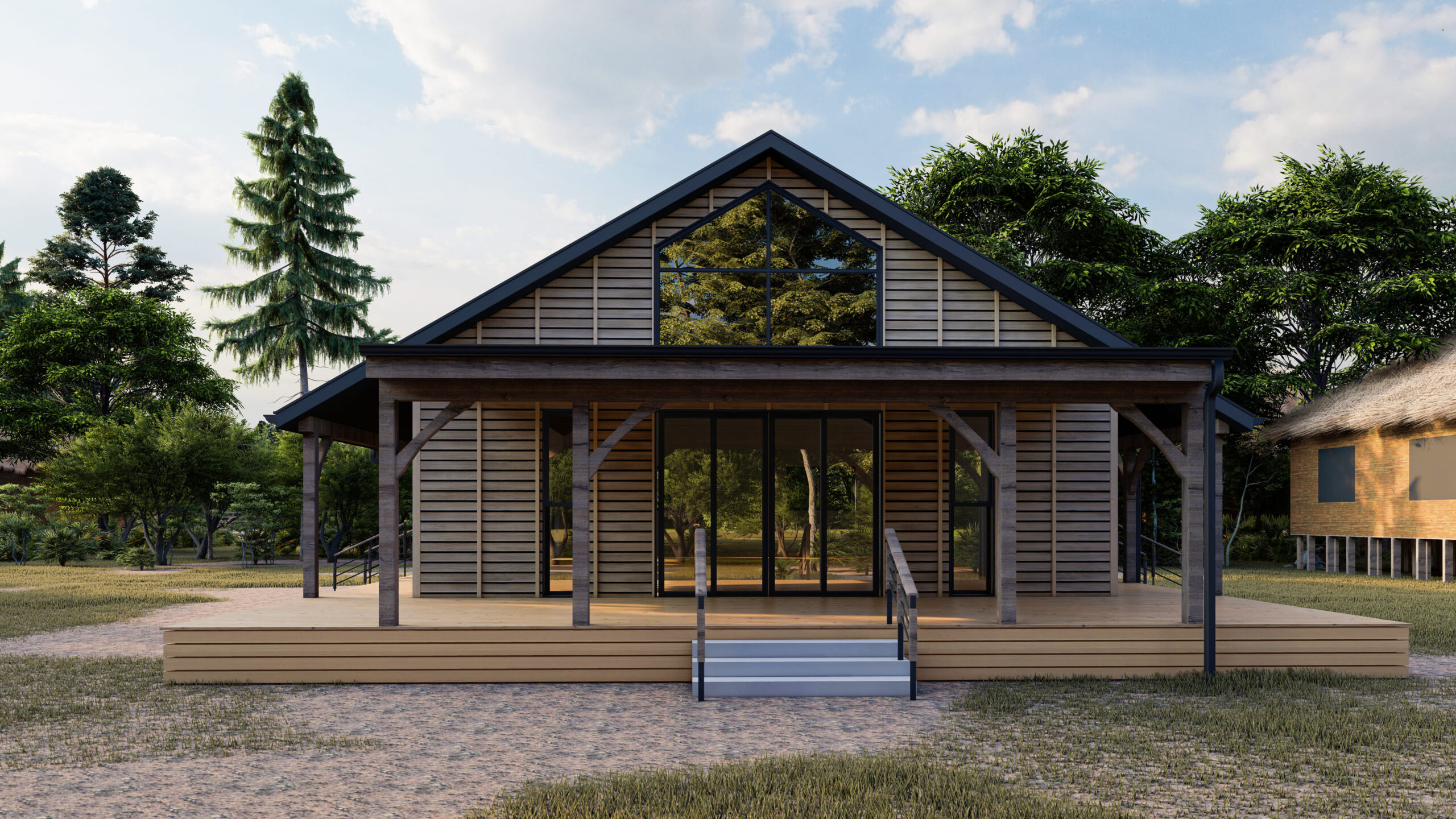
A timber barn home is built around a heavy timber frame-solid posts and beams cut from premium New Zealand timber, joined with mortise and tenon joinery the same way it’s been done for centuries. No metal brackets, no shortcuts. Just timber, oak pegs, and a proven method that has stood the test of time.
What that means inside is something most people don’t expect until they walk into one. There’s a presence to it-you can see the frame, feel the warmth of the wood, sense the care in every joint. It takes you back to a time when a home design was crafted with care, built to outlast you, and to still be standing for your children’s grandchildren to enjoy. That’s the feeling these homes carry-and that’s why we’ve put our names to them.
Built by Hand, Joint by Joint
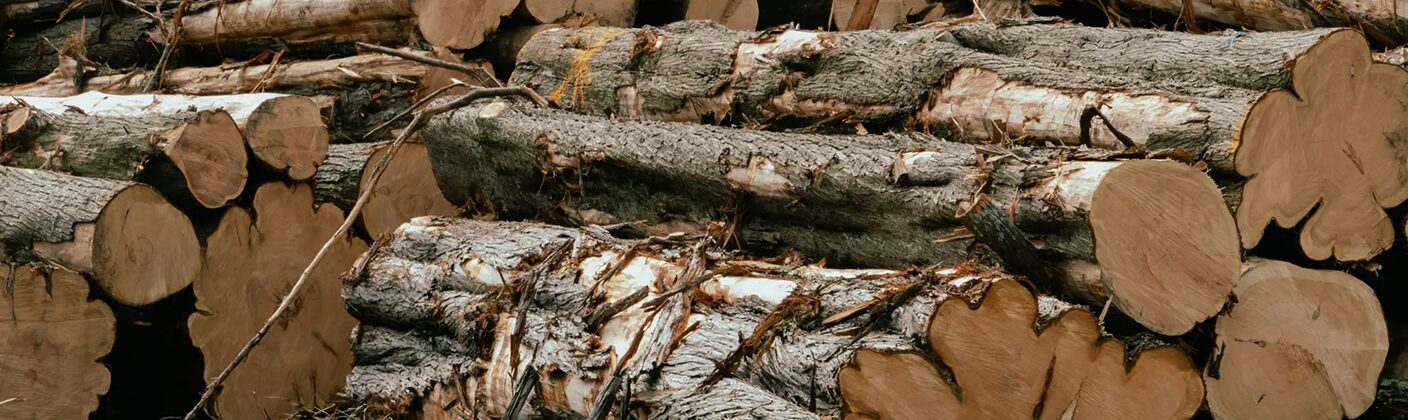
Most frames start as trees standing in a Hawke’s Bay forest. Our partners Heritage Timbercraft fell, mill, and cure the timber on their own farm, grading every beam by hand and selecting the most beautiful pieces to face out where they’ll be seen. Mortise and tenon joints are cut with mallet and chisel – electrical tools come out occasionally, but the strong preference is hand work. Oak pegs hold it together. The fitted frame is test-assembled on the farm, taken apart, and shipped to your section, where our crew raises it over one to four days. Considered, deliberate, the way it’s always been built.
The result is a home that’s stronger, more beautiful, and made to outlast modern stick-framed builds by generations. The frame is the structure and the feature at the same time – exposed where you can see it, doing the heavy lifting where you can’t see it. There are no shortcuts. And that’s exactly the point.
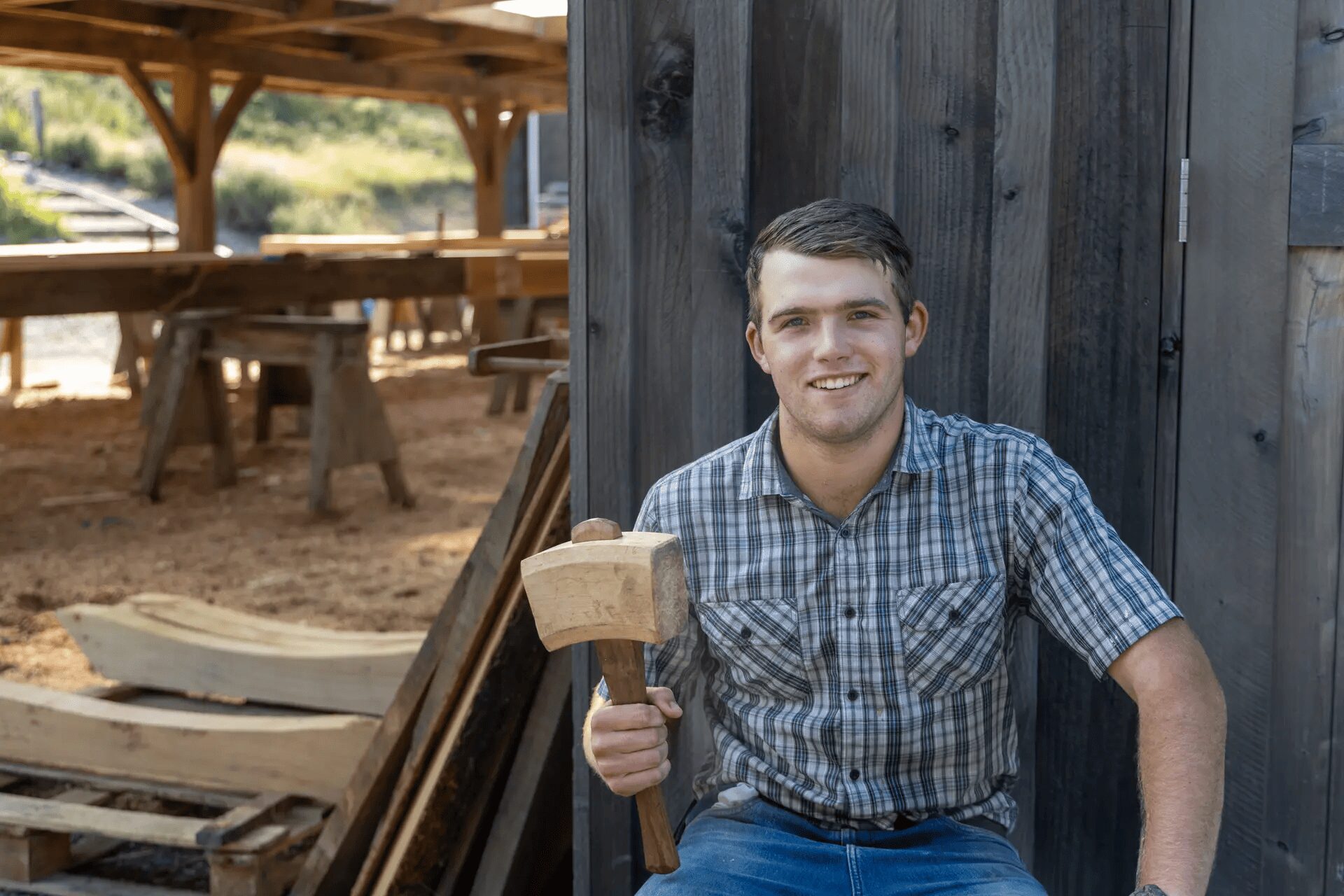
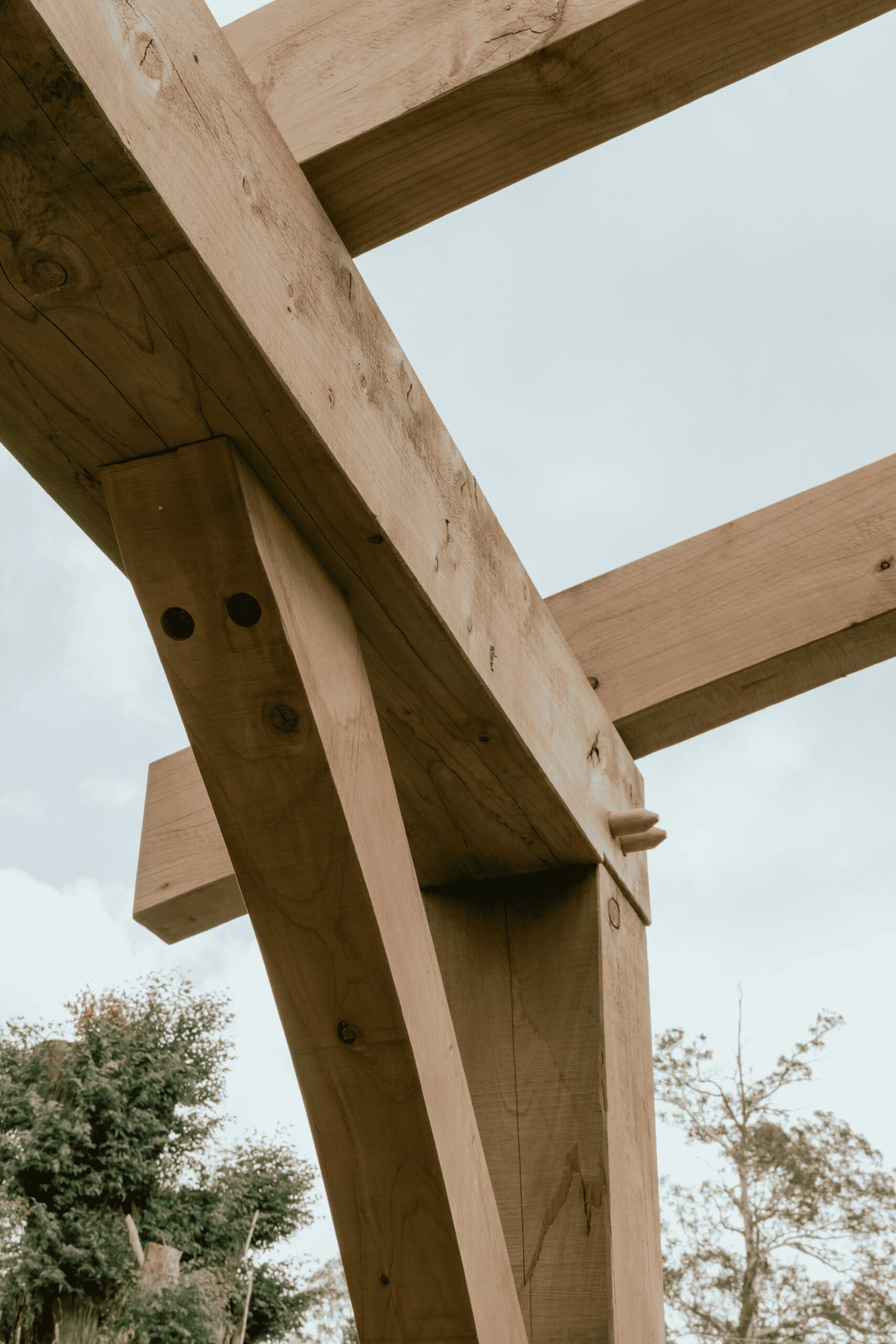
Built without nails or steel plates, traditional timber frames have stood for centuries.
New Zealand Timber, Chosen Carefully
All the timber that goes into a custom barn home is grown right here in New Zealand – most of it from small plantations near Heritage Timbercraft’s farm in Hawke’s Bay, where they do the felling, milling, and drying themselves. One beam typically represents one tree. Offcuts that aren’t right for a home end up as firewood. Nothing is wasted, and nothing arrives by container ship.
The species we work with most often
Douglas Fir – the workhorse. Stronger than Macrocarpa, handles long spans, and warms to a pinkish tone that matures over time. Most of the structural framing on a timber barn home leans on Douglas Fir.
Macrocarpa – rich colour, real depth of character, and a scent that lingers. Heritage Timbercraft hold a New Zealand-wide durability statement that allows Macrocarpa to be used untreated outside, so verandas and exterior timber don’t have to be loaded with chemicals.
English Oak – for the long view. Some of the oak we have access to was planted around 1900 and is now ready to harvest. As strong as it is iconic. The kind of timber you build a home around when you want it to mean something to your grandchildren.
There are other species in the range – Lawson Cypress, Redwood, Japanese Cedar, Elm – and we’ll talk through the right timber for your home as part of the design conversation.
Designed Around You
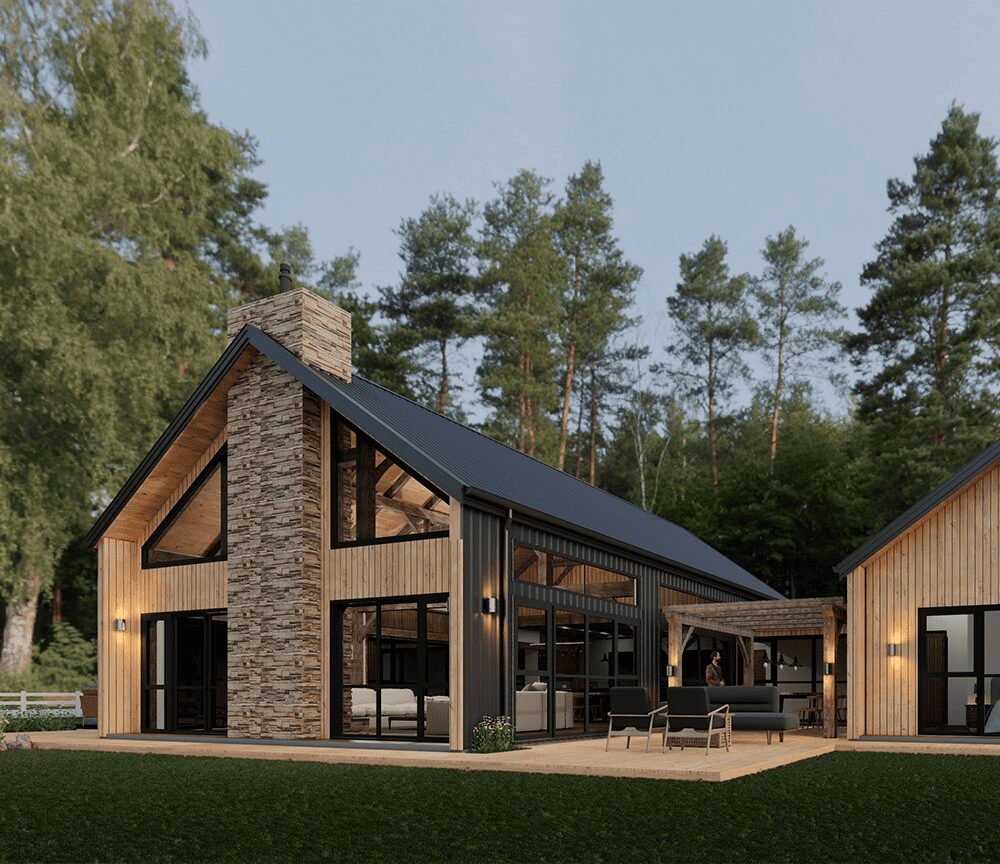
Most of our conversations start with a client showing me a picture and asking, “is this possible?” Almost always, the answer is, “yes, it is.”
From there, we shape it together – adjusting room sizes, working it around the section and the view, picking the timber, deciding which beams stay exposed and which sit hidden in the structure. The aim is a home that fits the way you want to live, not a template you bend yourself around.
Crafted by Heritage Timbercraft. Delivered by Us.
Heritage Timbercraft are based on Mohaka River Farm in Hawke’s Bay, a tight-knit operation cutting some of New Zealand’s finest hand-crafted timber frames. The team know every tree, mill every beam, and cut every mortise and tenon by hand. They’re the craftspeople behind the timber side of every barn home we build — and the reason these homes carry an integrity that’s hard to find anywhere else in the country.
It’s a partnership, not a supply arrangement. They source and craft the timber. We bring the home together on your section, manage the rest of the build, and make sure the design, the engineering, and the finishing all hold up to the standard the frame deserves.
Questions I Get Asked Often
Where do I even start if I don't have a plan?
Most people don’t, and that’s fine. The first conversation is just that — a conversation. You tell me about the section, roughly how you want to live, and what drew you to a timber barn home. From there we work out what’s possible, what it might look like, and whether it’s the right fit. You don’t need a brief, a floor plan, or a fixed budget before you pick up the phone.
How custom is a custom barn home, really?
Genuinely custom. There’s no catalogue, no standard plan we adjust at the edges. Room sizes, ceiling heights, veranda configuration, which timbers go where, how the home sits on the section and responds to the view — all of it is shaped around you. Some clients come in with a sketch. Others come with a photo they tore from a magazine. Both are useful starting points. The design evolves from there.
What does the design and build process look like?
It typically moves through a few clear stages. First, an initial conversation to understand what you’re after and whether a timber barn home is the right fit. From there, we bring Heritage Timbercraft’s design team in to start shaping the home — working through floor plan, timber selection, and how it all sits on your land. Once the design is resolved, we move into consenting and then construction.
Which timber species is right for my home?
That depends on what you’re building, where it’s going, and what you want it to look and feel like over time. Douglas Fir handles structural spans well and warms beautifully with age. Macrocarpa has real depth of character and can be used untreated outside. English Oak is for the long view — it’s strong, iconic, and the kind of timber that means something to the next generation. We’ll talk through the right species for each part of the home as part of the design conversation. Often it’s more than one.
Can I mix timber species throughout the home?
Yes, and often it’s the right call. Different species have different strengths, appearances, and durability characteristics — so the timber we’d choose for a structural post might differ from what we’d use for veranda cladding or interior feature beams. We’ll work through the combinations that make sense for your home both structurally and visually.
What happens if I've seen something on Heritage Timbercraft's site that I like?
Bring it. A photo, a screenshot, a link — whatever it is, it’s a useful starting point. Most of the conversations I have begin with someone showing me something and asking “is this possible?” Almost always, the answer is yes. The question is just how we make it work for your section, your family, and your budget.
Start a Conversation with Bru
You don’t need to know exactly what you want before reaching out. Most of my best conversations start with someone showing me a picture, telling me about the section, and asking what’s possible. We’ll go from there.